Written by Prisca Braga | Reading Time: 8 mins
At the Adventures of the Valparaíso, our work is continuously informed by a global network of activists, artists, researchers, changemakers, and community organizers. We are constantly asked for our go-to reading lists and media recommendations by volunteers, interns, and workshop participants, so we have compiled this open-access toolkit of books, podcasts, and video projects.
Instead of organizing by media format, we have categorized these resources into three areas essential for systemic transition: the Mind (structural theory), the Hands (practical application), and the Heart (relational and psychological unlearning). This collection explicitly prioritizes pluralistic, post-growth, and decolonial voices from both the Global North and South.

Tools for the Mind (Rethinking the System)
Introductory Frameworks
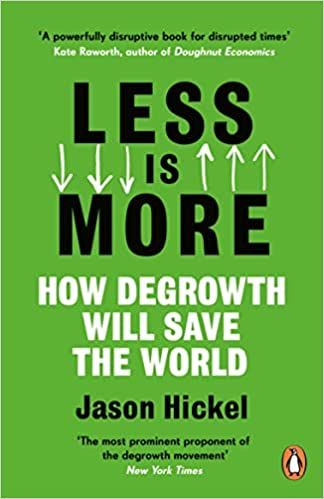
Less is More: How Degrowth Will Save the World by Jason Hickel – A clear macroeconomic critique of global capitalism, demonstrating why "green growth" is an ecological impossibility and arguing for a planned downscaling of material and energy throughput in high-income nations.
Encountering Development: The Making and Unmaking of the Third World by Arturo Escobar – A seminal post-development text exposing how Western development concepts function as a form of cultural and economic colonization, reducing diverse societies into mere economic targets.
Ideas to Postpone the End of the World by Ailton Krenak – A sharp critique from a prominent Indigenous Krenak leader and philosopher on the modern colonial mindset that detaches humanity from nature and treats life as a transactional asset.
Upstream Podcast produced by Dell Cameron and Elena Bird – A highly accessible audio documentary series exploring anti-capitalist concepts, the history of the commons, and the realities of green capitalism.
Advanced Degrowth & Political Ecology
The Future is Degrowth: A Guide to a World Beyond Capitalism by Matthias Schmelzer, Andrea Vetter, and Aaron Vansintjan – An advanced academic textbook that maps the distinct intellectual lineages of degrowth and outlines how a post-growth economy can practically manage infrastructure, public provisioning, and global trade.
Degrowth & Strategy: How to Bring About Socio-Ecological Transformation edited by Joëlle Saey-Volckrick et al. – A rigorous strategic anthology focused on the political realities of implementation, navigating the structural tensions between top-down state policy and bottom-up autonomous organizing.
Feminist Degrowth: Subsistence, Care, and Commons by Maria Mies and Veronika Bennhardt-Thomsen – An indispensable advanced text establishing that a post-growth economy cannot exist without centering the "subsistence perspective"—putting unpaid care work, life-sustenance, and household reproduction ahead of market production.
The Carbon Footprint of Colonialism by Max Ajl – A sharp political ecology analysis tracing how the climate crisis is intrinsically linked to colonial history, arguing that Global North climate policies must include massive atmospheric reparations and tech-sharing rather than eco-imperialism.
The Mushroom at the End of the World by Anna Lowenhaupt Tsing – An economic anthropology study looking at the commodity chain of the rare matsutake mushroom to explore how human and non-human communities survive, collaborate, and find life in the ruins of capitalist destruction.
The History of Development: From Western Origins to Global Faith by Gilbert Rist – A dense historical and epistemological critique exposing how "development" acts as a foundational, religious myth for modern secular states.
The Intercept's "Drilled" Podcast hosted by Amy Westervelt – A rigorous investigative true-crime podcast about climate change, detailing the corporate propaganda and legal strategies used by fossil fuel companies to stall systemic energy transitions.
Tools for the Hands (Applying the Transition)
Replenishing the Earth: Spiritual Values for Healing Ourselves and the World by Dr. Wangari Maathai – A practical guide to grassroots ecological restoration and community organizing from the founder of the Green Belt Movement and Nobel Laureate.
Braiding Sweetgrass: Indigenous Wisdom, Scientific Knowledge, and the Teachings of Plants by Dr. Robin Wall Kimmerer – An exploration of ecological restoration that bridges Indigenous Potawatomi botany with modern Western ecology, teaching us how to rebuild reciprocal relationships with the land.
The Zapatista Sixth Declaration of the Lacandon Jungle by the EZLN – A foundational text on grassroots indigenous autonomy, mutual aid, and cross-border solidarity detailing how communities can organize healthcare, education, and food production outside state and corporate markets.
To Think, To Write, To Act: Selected Writings by Chico Mendes – The foundational texts and speeches of the Brazilian rubber tapper and environmentalist who pioneered extractive reserves, showing how unionizing workers can directly defend the rainforest against industrial cattle ranching.
Designing Regenerative Cultures by Dr. Daniel Christian Wahl – The practical framework that informed our move to a terrestrial land base, moving beyond passive "sustainability" (which merely maintains a degraded system) toward active bioregional and ecological repair.
Pluriverse: A Post-Development Dictionary edited by Ashish Kothari, Ariel Salleh, Arturo Escobar, Federico Demaria, and Alberto Acosta – A reference text compiling over 100 essays on concrete, localized alternatives to the growth narrative, such as Buen Vivir and Ubuntu.
Lo-TEK: Design by Radical Indigenism by Julia Watson – A massive, visual compendium of generational, nature-based technologies from indigenous communities across the globe (such as living root bridges and ancient water filtration systems) that out-perform modern infrastructure.
The Red Nation Podcast hosted by Nick Estes and Jen Marley – An indigenous-led media platform focusing on native liberation, land-back movements, and anti-capitalist resistance strategies across the Americas.

Tools for the Heart (Unlearning and Interbeing)
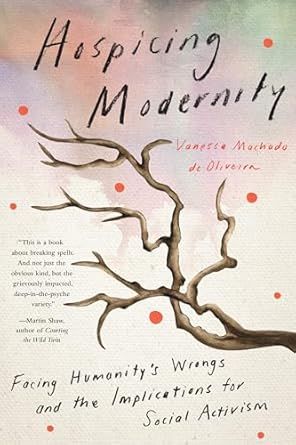
Hospicing Modernity: Facing Humanity's Wrongs and the Implications for Social Activism by Dr. Vanessa Machado de Oliveira – An essential text for our team that challenges us to build relational resilience and sit with the discomfort of systemic breakdown instead of chasing quick, comfortable fixes.
The Falling Sky: Words of a Yanomami Shaman by Davi Kopenawa and Bruce Albert – A monumental, deeply philosophical critique of Western consumerism and industrialism from the perspective of a Yanomami leader, warning that the destruction of the Amazon is the destruction of the sky that holds us all.
Earth Democracy: Justice, Sustainability, and Peace by Dr. Vandana Shiva – A fierce defense of the local commons—specifically seeds, water, and soil—against corporate monopolies, reminding us that true wealth is life itself.
Rest is Resistance: A Manifesto by Tricia Hersey – A vital book linking systemic burnout directly to racial capitalism. It frames rest, daydreaming, and slowing down not as luxuries, but as a form of active, somatic sabotage against a system that views humans as machines.
Sacred Economics: Money, Gift, and Society in the Age of Transition by Charles Eisenstein – A deep dive into how our currency system institutionalizes separation, and how we can revive gift economies and mutual aid networks in our daily operations.
Emergent Strategy: Shaping Change, Changing Worlds by Adrienne Maree Brown – A radical handbook for community organizing inspired by biomimicry and complex natural systems, focusing on how small, localized relational changes scale up to create massive civilizational shifts.
Help Expand the Library!
This collection is a living ecosystem. What books, podcasts, or grassroots documentation have altered your understanding of economic and ecological transitions? Leave your recommendations in the comments below, or connect with us directly to help expand the physical library!
If you wish to be more active in the regenerative journey, come join us!
References
Ajl, M. (2021). A people's green new deal. Pluto Press.
brown, a. m. (2017). Emergent strategy. AK Press.
Eisenstein, C. (2011). Sacred economics. Evolver Editions.
Escobar, A. (1995). Encountering development. Princeton University Press.
Guerrero, F., Saey-Volckrick, J., et al. (Eds.). (2022). Degrowth & strategy. Mayfly Books.
Hersey, T. (2022). Rest is resistance. Little, Brown Spark.
Hickel, J. (2020). Less is more. Heinemann.
Kimmerer, R. W. (2013). Braiding sweetgrass. Milkweed Editions.
Kopenawa, D., & Albert, B. (2013). The falling sky. Harvard University Press.
Kothari, A., et al. (Eds.). (2019). Pluriverse: A post-development dictionary. Tulika Books.
Krenak, A. (2020). Ideas to postpone the end of the world. House of Anansi Press.
Maathai, W. (2010). Replenishing the earth. Image.
Mendes, C. (1989). Fight for the forest. Latin America Bureau.
Mies, M., & Bennhardt-Thomsen, V. (1999). The subsistence perspective. Zed Books.
Oliveira, V. M. de. (2021). Hospicing modernity. North Atlantic Books.
Rist, G. (1997). The history of development. Zed Books.
Schmelzer, M., Vetter, A., & Vansintjan, A. (2022). The future is degrowth. Verso Books.
Shiva, V. (2015). Earth democracy. North Atlantic Books.
Tsing, A. L. (2015). The mushroom at the end of the world. Princeton University Press.
Wahl, D. C. (2016). Designing regenerative cultures. Triarchy Press.
Watson, J. (2019). Lo-TEK: Design by radical indigenism. Taschen.
About the Author: Prisca Braga is a non-formal educator, researcher, and member of the Anchor Team at The Adventures of the Valparaíso, where she shapes the association’s educational architecture and vision. Currently pursuing a Master’s in Global Political Economy and Development at the University of Kassel, she weaves together network building, program design, and systemic transition. Guided by political ecology, degrowth, and decolonial approaches, Prisca is dedicated to building regenerative learning spaces that help communities organize and thrive beyond extractive economic models.